円安は、誰の食卓に届くのかWhere Does the Weak Yen Land? ―― 為替が年金生活を削る仕組み— How the exchange rate eats into life on a pension
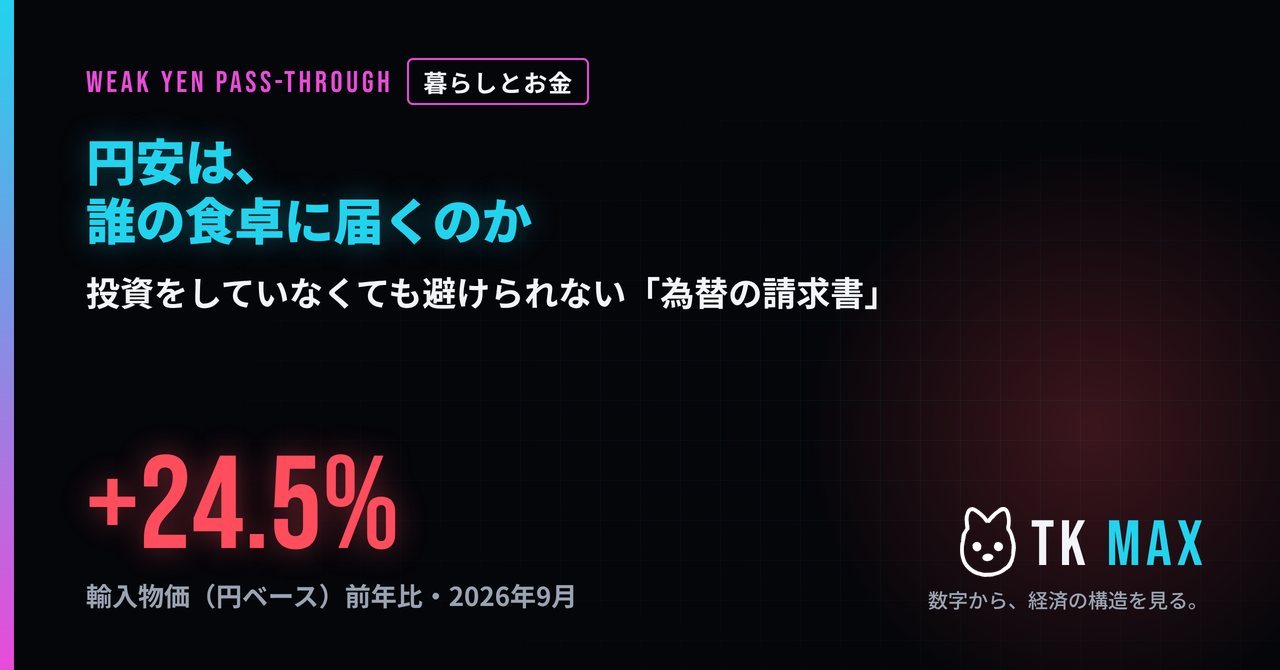
2026年9月、日本が輸入するモノの値段は、円で見ると1年前より24.5%高くなりました。そのうち約6.6ポイントは、海外の値段ではなく円の価値が下がったことだけで生まれた上乗せです。この上乗せは、企業の仕入れ、店頭の値札へと約1年かけて流れ下り、最後は家計に届きます。そして、届く先で一番重くなるのは、収入が年金に固定され、支出の約4割を食料と光熱費が占める高齢者の世帯です。このダッシュボードは、その流れを順番に追い、ドル円が動いたときにあなたの家計がいくら重くなるのかを試算します。
In September 2026, the goods Japan imports cost 24.5% more in yen than a year earlier. About 6.6 points of that came not from overseas prices but simply from the yen losing value. That markup flows down through company purchasing and shop price tags over roughly a year before it reaches households. Where it lands hardest is older households — whose income is fixed to a pension and whose spending is about 40% food and energy. This dashboard follows that flow step by step and estimates how much heavier your household budget gets when the dollar-yen rate moves.
📄=日銀・総務省・厚労省・内閣府などの公表統計や、複数の主要報道で確認された事実。📊=統計の組み合わせから読み取れる関係(因果の断定ではない)。💬=専門家の間でも評価が割れている解釈。🧮=試算のために本ページが置いた仮定(公的な推計ではない)。📄 = official statistics (BOJ, MIC, MHLW, Cabinet Office) or facts confirmed by multiple major outlets. 📊 = relationships read from combined statistics (not a causal claim). 💬 = interpretations on which experts disagree. 🧮 = assumptions this page sets for its estimates (not official projections).
OVERVIEW為替の値札は、遅れて、偏って届くThe currency's price tag arrives late — and unevenly
円安は株価や企業の決算のニュースとして語られることが多いのですが、家計にとっての円安は「輸入品の値上げ」です。日本は原油・天然ガスのほぼ全量、小麦の大半、家畜の飼料の多くを海外から買っています。円の価値が下がれば、同じドル建ての値段でも払う円は増えます。
The weak yen is usually discussed as stock-market or earnings news, but for households it means pricier imports. Japan buys almost all its crude oil and natural gas, most of its wheat and much of its animal feed from abroad. When the yen falls, the same dollar price costs more yen.
日銀の輸入物価指数には「円ベース」と「契約通貨ベース(ドルなど取引に使った通貨)」の2種類があります。2026年9月は円ベース+24.5%、契約通貨ベース+17.9%。この差の約6.6ポイントが、為替の変動によって上乗せされた分の目安です。
The BOJ import price index comes in two forms: yen basis and contract-currency basis (the currency used in the deal, such as dollars). In September 2026: yen basis +24.5%, contract-currency basis +17.9%. The gap of about 6.6 points is a rough measure of the markup added by exchange-rate moves.
内閣府の分析では、10%の円安で食料品の消費者物価は約1年強後に+1.5%、2年後に+2.7%上がります。今日の為替が、来年の食卓の値段を決めているということです。
Cabinet Office analysis finds that a 10% yen depreciation raises consumer food prices by about 1.5% after a little over a year and 2.7% after two years. Today's exchange rate sets next year's grocery prices.
2026年度の年金は、物価が3.2%上がったのに対し基礎年金+1.9%、厚生年金+2.0%の改定でした。賃金の伸びが物価より低い年は賃金に合わせ、さらにマクロ経済スライドで差し引く仕組みのためです。
For FY2026, prices rose 3.2% but pensions were revised by +1.9% (basic) and +2.0% (employees'). When wages grow more slowly than prices, the revision follows wages, and the macro-economic slide then subtracts a bit more.
大和総研の試算では、10%の円安で物価は3年かけて+1.8%上がり、賃金も遅れて追いつきますが、年金生活者や低所得層は実質所得が減ったままになりやすいとされます。株式などの資産が少ない高齢者ほど、円安の「得」を受け取る経路がありません。
Daiwa Institute of Research estimates a 10% depreciation lifts prices 1.8% over three years, with wages catching up late, while pensioners and low-income households tend to stay worse off in real terms. Older people with few stocks have no channel to receive the weak yen's "gains."
このページの読み方How to read this page
- 「02 届くまでの道」で、為替の上乗せが店頭に届くまでの段階と時間差を確認します。
- 「03 品目マップ」で、高齢世帯の支出のどこに円安が効きやすいかを見ます。
- 「04 家計シミュレーター」で、ドル円を動かして自分の世帯の年間負担を試算します。
- 「05」〜「07」で、年金の仕組み、今年の介入、投資をしない人の備えを確認します。
- "02 The Path" shows the stages and delays as the currency markup reaches shop shelves.
- "03 Item Map" shows where in older households' spending the weak yen bites most.
- "04 Household Simulator" lets you move the dollar-yen rate and estimate your annual burden.
- "05"–"07" cover the pension mechanism, this year's interventions, and defenses for people who do not invest.
THE PATH為替 → 輸入物価 → 企業物価 → 消費者物価Exchange rate → import prices → producer prices → consumer prices
🧮STEP 2・3の期間は、品目や契約によって幅がある目安です。STEP 4の「約1年」は内閣府分析に基づきます。STEP 2–3 durations are rough guides that vary by item and contract. The "~1 year" in STEP 4 is based on Cabinet Office analysis.
2026年9月:円ベースと契約通貨ベースの差September 2026: yen basis vs contract-currency basis
出典:日本銀行「企業物価指数(2026年9月速報)」。エネルギー=石油・石炭・天然ガス、飲食料品=飲食料品・食料用農水産物。Source: Bank of Japan, Corporate Goods Price Index (Sep 2026 preliminary). Energy = petroleum, coal & natural gas; food = food, beverages & agricultural/marine products for food.
エネルギーは契約通貨ベースでも+36.1%と、中東情勢による国際価格の上昇がまず大きく、そこに円安の約7.5ポイントが重なっています。円安だけを止めても、エネルギー価格の上昇の大半は残ります。
Energy is up 36.1% even in contract currency — global prices driven by Middle East tensions come first — and the weak yen adds roughly 7.5 points on top. Stopping the yen's fall alone would leave most of the energy increase in place.
飲食料品は円ベース+6.2%のうち、契約通貨ベースは+2.2%。上昇分の約3分の2が為替によるものです。食料品の値上げは、海外相場よりも為替の影響を強く受けている計算になります。
Food is up 6.2% in yen but only 2.2% in contract currency — about two-thirds of the rise comes from the exchange rate. Food price hikes are, by this measure, driven more by the currency than by overseas markets.
食料品に届く2つの経路Two channels into food prices
📄内閣府の分析によると、円安が食料品の値段に届く経路は2つあります。チョコレートやパスタのような輸入された完成品と、小麦・カカオ豆・飼料・包装用プラスチック・燃料のような国内で加工する原材料です。食料品の製造に使われる輸入原材料の比率は、2000年の10.0%から2020年には14.2%に上がっており、日本の食卓は以前より為替に敏感になっています。
📄Cabinet Office analysis identifies two channels: imported finished goods such as chocolate and pasta, and raw materials processed at home such as wheat, cacao beans, feed, plastic packaging and fuel. The share of imported inputs in food manufacturing rose from 10.0% in 2000 to 14.2% in 2020, so Japanese tables are more sensitive to the currency than before.
10%の円安が食料品の消費者物価(生鮮食品・米を除く)を押し上げる累積効果。内閣府「月例経済報告 関係資料」(2026年2月)。Cumulative effect of a 10% yen depreciation on consumer food prices (excluding fresh food and rice). Cabinet Office monthly economic report materials (Feb 2026).
ITEM MAP高齢世帯の支出のどこに、円安は効くのかWhere in older households' spending does the weak yen bite?
総務省の家計調査(2025年)で、65歳以上の夫婦だけの無職世帯は月に約26.4万円を支出しています。費目ごとに、円安の効きやすさを3段階で色分けしました。
In the MIC Family Income and Expenditure Survey (2025), retired couples aged 65+ spend about ¥264,000 a month. Each category is rated in three tiers for how strongly the weak yen affects it.
| 費目Category | 夫婦世帯(月)Couple (monthly) | 単身世帯(月)Single (monthly) | 円安の効きやすさYen sensitivity | 主な理由Main reason |
|---|---|---|---|---|
| 食料Food | 78,964 | 42,545 | 高High | 輸入小麦(10月から売渡価格+12%)、食用油、輸入肉、飼料経由の肉・卵・乳製品、包装材Imported wheat (government sale price +12% from Oct), cooking oil, imported meat, feed-driven meat/eggs/dairy, packaging |
| 光熱・水道Utilities | 23,540 | 15,565 | 高High | 電気・ガスの燃料(LNG・石炭・原油)はほぼ全量輸入。燃料費調整で数か月遅れて料金に反映Fuel for power and gas (LNG, coal, oil) is almost fully imported; passed into bills a few months later via fuel-cost adjustment |
| 交通・通信Transport & comms | 31,325 | 13,601 | 中Mid | ガソリン・灯油は効きやすいが、通信料・運賃は為替の影響が小さいGasoline/kerosene are sensitive; phone bills and fares much less so |
| 家具・家事用品Household goods | 11,237 | 6,069 | 中Mid | 家電・日用品の多くが輸入品や輸入部品Many appliances and daily goods are imported or use imported parts |
| 被服及び履物Clothing | 5,354 | 3,049 | 中Mid | 衣料品の大半は海外生産Most clothing is made overseas |
| 教養娯楽Recreation | 26,538 | 16,132 | 低〜中Low–mid | 旅行・サービスは国内要因が中心。機器類は輸入の影響Travel and services are mostly domestic; devices carry import effects |
| 保健医療Health | 17,941 | 8,388 | 低Low | 医療費・薬価は公定価格のため、すぐには動かないMedical fees and drug prices are officially set, so they do not move quickly |
| 住居Housing | 17,739 | 11,416 | 低Low | 持ち家中心の平均。修繕資材は輸入の影響を受けるAverage dominated by owners; repair materials are import-sensitive |
| その他Other | 51,341 | 31,681 | 低Low | 交際費・諸雑費など。一部に輸入品を含むSocial spending and miscellaneous; some imported goods |
| 消費支出 合計Total spending | 263,979 | 148,445 | 可処分所得は夫婦221,544円・単身118,465円で、どちらもすでに赤字Disposable income is ¥221,544 (couple) and ¥118,465 (single) — both already in deficit |
📄金額:総務省「家計調査 2025年平均」65歳以上の夫婦のみの無職世帯/65歳以上の単身無職世帯(円)。Amounts: MIC Family Income and Expenditure Survey, 2025 average, retired couples 65+ / retired singles 65+ (yen). 🧮効きやすさの3段階は、本ページが統計と品目の輸入依存度から置いた目安です。The three sensitivity tiers are this page's guide based on statistics and import dependence.
「高」の2費目(食料+光熱・水道)は、夫婦世帯で支出の38.8%、単身世帯で39.2%。外食や教育、ローン返済が多い現役世帯に比べ、毎日の必需品の比率が高いため、同じ円安でも負担の比率が大きくなります。
The two "High" categories (food + utilities) are 38.8% of spending for couples and 39.2% for singles. Compared with working households that spend more on eating out, education and loans, daily necessities weigh more — so the same depreciation is a bigger share of their budget.
国産の野菜・果物の値段は、為替より天候や収穫量で大きく動きます。ただし、肥料・燃料・ハウス暖房・飼料は輸入に頼るため、時間をかけて円安の影響は入ってきます。
Domestic vegetables and fruit move more with weather and harvests than with the currency. But fertilizer, fuel, greenhouse heating and feed are imported, so the weak yen seeps in over time.
HOUSEHOLD SIMULATORドル円が動くと、あなたの家計は年にいくら重くなるかWhen the dollar-yen moves, how much heavier is your year?
費目別の負担増(年間)Extra cost by category (per year)
計算方法と前提(クリックで開く)Method and assumptions (click to open)
① 円安率=(設定レート÷150)−1。② 費目ごとに「円安1%あたりの値上がり率(波及係数)」を掛け、家計調査の月額支出に乗じて負担増を出します。③ 円高(150円より強い)側は、値下がりが値上がりより遅く小さい傾向を踏まえ、効果を半分にしています。
波及係数(約1年後/約2年後):食料 0.15/0.27、光熱・水道 0.35/0.40、交通・通信 0.10/0.12、家具・家事 0.12/0.18、被服 0.10/0.15、教養娯楽 0.06/0.10、保健医療 0.03/0.05、住居 0.03/0.06、その他 0.05/0.08。
根拠:食料は内閣府分析(10%円安で1年強後+1.5%、2年後+2.7%)、全体は大和総研の試算(10%円安で物価+1.1%〜+1.5%)に高齢世帯の支出構成で合わせた🧮本ページの想定です。円安以外の要因(原油相場・天候・賃金)は含みません。支出量は変えない(節約による調整なし)前提です。
① Depreciation = (rate ÷ 150) − 1. ② Each category's pass-through coefficient (price rise per 1% depreciation) is multiplied by its monthly spending from the survey. ③ On the appreciation side (stronger than ¥150), the effect is halved, reflecting that price cuts tend to come slower and smaller than price hikes.
Coefficients (~1 yr / ~2 yrs): food 0.15/0.27, utilities 0.35/0.40, transport & comms 0.10/0.12, household goods 0.12/0.18, clothing 0.10/0.15, recreation 0.06/0.10, health 0.03/0.05, housing 0.03/0.06, other 0.05/0.08.
Basis: food follows Cabinet Office analysis (10% depreciation → +1.5% after a little over a year, +2.7% after two); the total is calibrated to Daiwa's estimate (10% → prices +1.1% to +1.5%) using older households' spending mix — 🧮this page's assumption. Non-currency factors (oil prices, weather, wages) are excluded. Quantities are held fixed (no belt-tightening).
※試算は教育・研究目的の目安であり、将来の物価や為替を予測するものではありません。*Estimates are rough guides for education and research, not forecasts of future prices or exchange rates.
WHY PENSIONS LAG物価が上がっても、年金は同じだけ上がらないPrices rise, but pensions don't rise as much
受給中の年金は原則として物価に合わせて改定されますが、賃金の伸びが物価を下回る年は賃金に合わせます。2026年度は物価3.2%、賃金2.1%だったため、2.1%が出発点になりました。
Pensions in payment are normally revised with prices, but when wages grow less than prices, they follow wages. For FY2026 prices rose 3.2% and wages 2.1%, so 2.1% became the starting point.
支え手の減少と平均寿命の延びに合わせて、改定率を少しずつ抑える仕組みです。2026年度は−0.2%で、基礎年金の改定は+1.9%(国民年金の満額は月70,608円)、厚生年金の報酬比例部分は+2.0%、モデル夫婦世帯は月237,279円になりました。
A mechanism that trims revisions in line with a shrinking workforce and longer lives. For FY2026 it was −0.2%, leaving the basic pension at +1.9% (full national pension ¥70,608 a month), the earnings-related part at +2.0%, and the model couple at ¥237,279 a month.
4月の改定は前年の物価と過去数年の賃金をもとに決まります。円安で今年上がった物価が年金に反映されるのは、早くても翌年度です。円安が値札に届くまでの約1年と、年金が反映するまでの約1年が重なり、年金生活者はおよそ2年近く、目減りした状態で暮らすことになります。
April revisions are set from the previous year's prices and several past years of wages. Prices pushed up by the weak yen this year reach pensions next fiscal year at the earliest. The ~1 year for the yen to reach price tags and the ~1 year for pensions to reflect it stack up, so pensioners live with eroded purchasing power for close to two years.
マクロ経済スライドは、将来世代の年金水準を守るための調整です。今の受給者の目減りと、将来の受給者の給付水準は、トレードオフの関係にあります。どちらを重く見るかは、立場によって評価が分かれます。
The macro slide exists to protect benefit levels for future generations. Today's pensioners' erosion and tomorrow's benefit level trade off against each other, and how to weigh them depends on where one stands.
INTERVENTION & CROSSROADS2026年、政府は約27兆円で円を買い支えたIn 2026, Japan spent about ¥27 trillion propping up the yen
介入は外貨準備のドルを売って円を買うため、使える額に限りがあります。日米の金利差という根本の原因が残る限り、効果は数週間で薄れやすいことを、2026年の2回の介入が示しました。家計にとっては、急な円安を和らげて値上げの速度を落とす意味はありますが、方向そのものは金利の動きで決まります。
Intervention sells dollars from reserves to buy yen, so its scale is limited. As long as the root cause — the Japan-US interest-rate gap — remains, the effect tends to fade within weeks, as both 2026 rounds showed. For households it slows sudden depreciation and the pace of price hikes, but the direction is set by interest rates.
これからの3つの分かれ道Three crossroads ahead
FRBが据え置き、日銀が12月に1.5%へ利上げ。金利差が縮む方向で145円前後へ。値上げは来年後半から和らぐが、値下がりは遅い。
The Fed holds and the BOJ hikes to 1.5% in December. The rate gap narrows toward about ¥145. Price hikes ease from late next year, but cuts come slowly.
155〜160円で推移し、160円に近づくたびに介入の警戒が強まる。今年の円安分が来年にかけて食料品へ順に届く。
Trades at ¥155–160, with intervention fears rising each time ¥160 nears. This year's depreciation reaches food prices in sequence through next year.
FRBが利上げし、日銀が追いつけない。介入を重ねても170円台をうかがう。食料・光熱費の値上げが重なり、年金の改定が追いつかない期間が長引く。
The Fed hikes and the BOJ can't keep pace. Even repeated intervention fails to stop a test of ¥170. Food and energy hikes pile up and the period in which pensions lag grows longer.
💬どの分かれ道に進むかは、専門家の間でも見方が分かれます。日銀の政策金利は2026年9月に1.25%へ引き上げられ、大和総研は12月に1.5%を見込んでいます。Experts disagree on which path is likelier. The BOJ raised its policy rate to 1.25% in September 2026, and Daiwa expects 1.5% in December.
DEFENSES WITHOUT INVESTING為替は選べない。支出の側でできることYou can't choose the exchange rate — but you can act on spending
📄電気料金の燃料費調整は、3か月間の平均燃料価格を約2か月後の料金に反映する仕組みです。つまり、今月の円安と燃料価格は、3〜5か月後の請求書に出てきます。電力会社が毎月公表する燃料費調整単価を見れば、冬の請求額が重くなるかを先に知ることができます。
📄The fuel-cost adjustment in power bills applies a three-month average fuel price about two months later. So this month's yen and fuel prices show up on bills three to five months on. Checking the adjustment rate each utility publishes monthly tells you in advance whether winter bills will be heavier.
小麦製品(パン・麺)、食用油、輸入肉、コーヒー・チョコレートは円安の影響を受けやすい品目です。国産の旬の野菜・魚・米に比重を移すと、円安の影響を受けにくくなります(ただし、豆腐・納豆の原料の大豆は輸入が多いなど、品目ごとに差があります)。
Wheat products (bread, noodles), cooking oil, imported meat, coffee and chocolate are yen-sensitive. Shifting weight toward seasonal domestic vegetables, fish and rice reduces exposure (though even items like tofu and natto depend heavily on imported soybeans — it varies by item).
📄年金生活者支援給付金(所得などの要件あり)、住民税非課税世帯向けの給付、国民健康保険料・介護保険料の軽減など、申請が必要な制度があります。お住まいの自治体の広報や窓口で、対象になっていないか確認する価値があります。
📄Some programs require an application — the pension supplementary benefit (with income conditions), payments for households exempt from resident tax, and reductions in health and long-term-care insurance premiums. It is worth checking your municipality's notices or offices to see whether you qualify.
- 📄電気・ガス料金の支援:2026年7〜9月使用分(電気3.5〜4.5円/kWh、都市ガス14〜18円/m³)。本ページ作成時点(10月15日)で冬季分の実施は確認できていません。
- 📄飲食料品の消費税:2027年4月から2年間、1%に引き下げ(2026年8月閣議決定)。
- 📄輸入小麦の政府売渡価格:2026年10月〜2027年3月期は+12.0%(約70,020円/トン)。パン・麺類の値上げは数か月遅れて出やすい。
- 📄Electricity and gas support: usage in Jul–Sep 2026 (power ¥3.5–4.5/kWh, city gas ¥14–18/m³). As of this page (Oct 15) no winter extension had been confirmed.
- 📄Consumption tax on food and drink: cut to 1% for two years from April 2027 (Cabinet decision, Aug 2026).
- 📄Government sale price of imported wheat: +12.0% for Oct 2026–Mar 2027 (about ¥70,020/ton). Bread and noodle price hikes tend to follow a few months later.
高齢夫婦の無職世帯は、2025年の時点ですでに毎月約4.2万円を貯蓄の取り崩しで補っています。円安の負担はその赤字に上乗せされます。支出の工夫は大切ですが、個人の努力で吸収できる幅には限りがあり、年金の改定ルールや物価対策のあり方という制度の側の議論と切り離せません。
Retired couples were already drawing down about ¥42,000 of savings each month in 2025. The weak yen adds to that deficit. Spending choices matter, but what individuals can absorb is limited — it cannot be separated from debates on the system side, such as pension revision rules and inflation relief.
BOTH SIDES & SOURCES円安は、誰かにとっては追い風でもあるFor some, the weak yen is a tailwind
- 輸出企業や海外で稼ぐ企業の円換算の利益が増え、税収も増える。
- 訪日客の消費が増え、観光地や地方の宿泊・飲食が潤う。
- 📊年金積立金(GPIF)は資産の約半分を外国資産で持つため、円安で評価額が増える。将来の年金財政を支える面がある。
- 企業の利益が賃上げに回れば、現役世代の所得は遅れて追いつく。
- Exporters and firms earning abroad see bigger profits in yen, and tax revenue rises.
- Inbound tourist spending grows, helping hotels and restaurants in tourist and rural areas.
- 📊The pension reserve fund (GPIF) holds about half its assets abroad, so a weak yen raises their value — supporting future pension finances.
- If profits flow into wages, working-age incomes catch up with a lag.
- 収入が年金などに固定され、資産の多くが預金の高齢世帯。
- 賃上げの恩恵が届きにくい中小企業の働き手や非正規の働き手。
- 輸入原材料に頼り、価格転嫁が難しい中小の製造業・小売・飲食。
- 寒冷地など灯油・電気の使用量が多い地域の世帯。
- Older households whose income is fixed to pensions and whose assets are mostly deposits.
- Workers at small firms and non-regular workers who see little of the wage gains.
- Small manufacturers, retailers and restaurants that rely on imported inputs and struggle to pass on costs.
- Households in cold regions that use a lot of kerosene and electricity.
日米の金利差が主因とする見方が一般的ですが、デジタル関連サービスの海外への支払い(いわゆるデジタル赤字)、企業の海外投資で得た利益が国内に戻らないこと、エネルギーの輸入額の大きさなど、構造的な要因を重く見る見方もあります。金利差が縮んでも円が戻りにくいのではないか、という議論は決着していません。
The Japan-US rate gap is the common explanation, but some stress structural factors: payments abroad for digital services (the so-called digital deficit), profits from overseas investment not returning home, and the sheer size of energy imports. Whether the yen would rebound even if the rate gap narrowed remains unsettled.
出典Sources
- 日本銀行「企業物価指数(2026年9月速報)」Bank of Japan, Corporate Goods Price Index (Sep 2026 preliminary) boj.or.jp
- 内閣府「為替変動の食料品価格への波及」(月例経済報告 関係資料、2026年2月)Cabinet Office, exchange-rate pass-through to food prices (Feb 2026) cao.go.jp
- 大和総研「円安の物価・家計への影響」(2026年9月30日)Daiwa Institute of Research, weak-yen effects on prices and households (Sep 30, 2026) dir.co.jp
- 大和総研「2026年8月全国消費者物価」Daiwa Institute of Research, August 2026 national CPI dir.co.jp
- 大和総研「日銀9月会合」Daiwa Institute of Research, BOJ September meeting dir.co.jp
- 総務省「家計調査 2025年平均」MIC, Family Income and Expenditure Survey, 2025 average stat.go.jp
- 2026年度の年金額(国民年金・改定率)FY2026 pension amounts (national pension, revision rates) moneiro.jp / financial-field.com
- 為替介入の実績・円相場(共同通信配信)Intervention records and yen moves (Kyodo) kumanichi.com / kumanichi.com / kumanichi.com
- 米9月CPIと市場の反応US September CPI and market reaction zaikei.co.jp
- 輸入小麦の政府売渡価格(2026年10月期)Imported wheat government sale price (Oct 2026 period) kumanichi.com
- 飲食料品の消費税1%の閣議決定Cabinet decision on 1% consumption tax for food sakigake.jp
- 2026年夏の電気・ガス料金支援Summer 2026 electricity and gas support selectra.jp
データは2026年10月15日時点の公開情報に基づきます。為替・物価は日々動くため、最新の数字は各出典でご確認ください。Data reflect public information as of October 15, 2026. Exchange rates and prices move daily; check each source for the latest figures.
※本ページは公開統計・報道をもとにした教育・研究目的の分析です。特定の金融商品の売買や為替取引を推奨・示唆するものではなく、投資助言ではありません。シミュレーターの数値は本ページの想定に基づく目安であり、将来の物価・為替・年金額を予測するものではありません。給付・減免の要件は、必ずお住まいの自治体や年金事務所でご確認ください。
*This page is an educational and research analysis based on public statistics and reporting. It does not recommend or imply buying or selling any financial product or currency and is not investment advice. Simulator figures are rough guides based on this page's assumptions, not forecasts of future prices, exchange rates or pensions. Always confirm benefit and reduction requirements with your municipality or pension office.