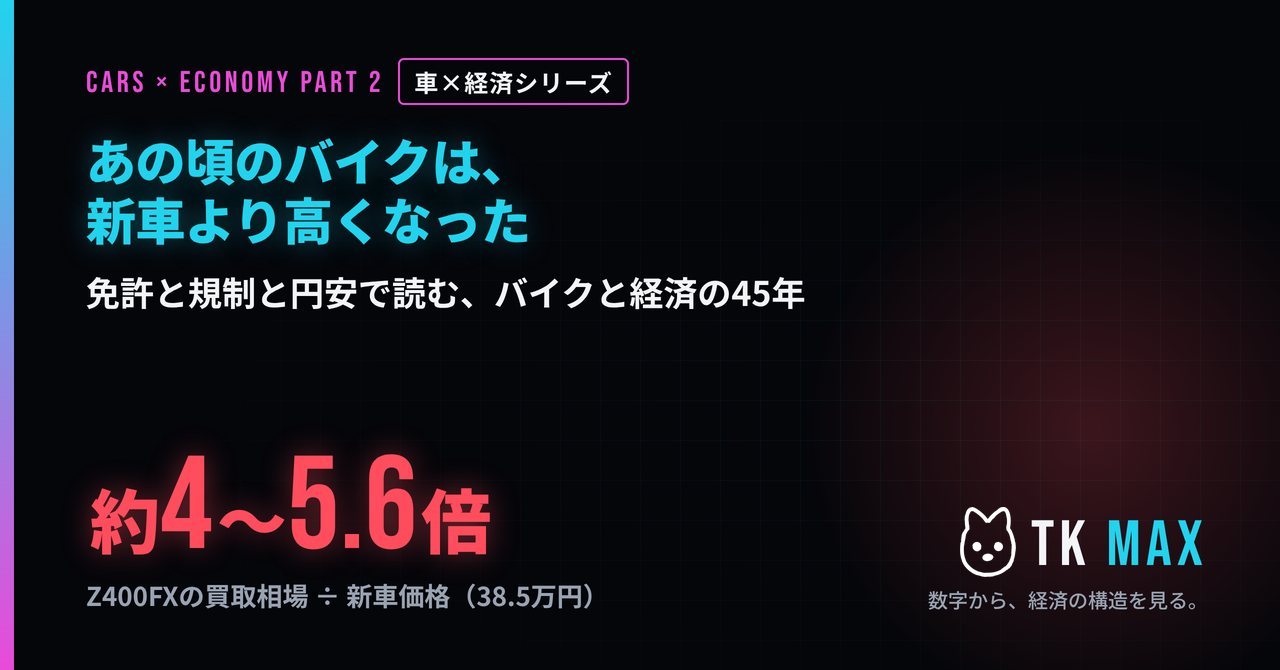
あの頃のバイクは、新車より高くなったThe Old Bikes Now Cost More Than New―― 免許と規制と円安で読む、バイクと経済の45年— 45 years of motorcycles and the economy, read through licences, regulation and the yen
✨ 公開データをもとに、独立した立場で分析しています。✨ Independent analysis built on public data.☕ 応援するSupport
💡 なぜ作ったか:作者のクルマ遍歴は、スクーター、FX400、ガンマ、ウォーターウルフというバイクから始まりました。あの頃は街にバイクがあふれていたのに、いまは新車がほとんど売れず、逆に当時のバイクが新車価格の何倍もの値段で取引されています。その間に何が起きたのかを、前編のクルマ編に続いて数字で確かめたくて作りました。💡 Why this dashboard: The author's riding life began on two wheels: a scooter, an FX400, a Gamma and a "Water Wolf." Back then the streets were full of bikes; now new ones barely sell, while the bikes of that era trade for several times their original price. Following the car edition, I built this to check with numbers what happened in between.
In 1982 Japan bought about 3.27 million motorcycles in a single year. In 2025 it was just under 400,000 — 11% of the peak. Yet the Kawasaki Z400FX, sold new for ¥385,000 in 1979, now fetches ¥1.6–2.15 million at dealer buy-in prices. In a country where new bikes do not sell, only old bikes are rising in value. This dashboard follows how licences and the "three no's" campaign, the end of race replicas and two-strokes, the end of 50cc mopeds, the classic-bike boom and the weak yen, and the global two-wheeler market have reshaped the price tag on motorcycles. It is the sequel to the car edition, "Your Old Car Now Has a Price Abroad."
📄=業界団体・官公庁・自治体の公表値や、複数の報道で確認された事実。📊=数字の組み合わせから読み取れる関係(因果の断定ではない)。💬=立場によって評価が分かれる解釈。🧮=試算のために本ページが置いた仮定。絶版車の相場は買取店が公表する業者間取引の目安で、販売価格はこれより高く、個体の状態で大きく変わります。📄 = figures published by industry bodies, government or municipalities, or facts confirmed by multiple reports. 📊 = relationships read from combined figures (not causal claims). 💬 = interpretations that differ by viewpoint. 🧮 = assumptions this page makes for its estimates. Classic-bike prices are dealer-auction benchmarks published by a buyer; retail prices are higher and vary widely with condition.
OVERVIEW新車は売れず、古いバイクだけが値上がりするNew bikes don't sell; only old ones gain value
Motorcycles have been shaped by rules even more than cars. Licensing decided which engine sizes people could ride, schools and social mood decided who rode, and emissions rules decided which engines were allowed. The price of bikes that are no longer made is now set by scarcity at home, demand abroad and the exchange rate.
📉 縮んだもの📉 What shrank
年間販売:1982年の約327万台 → 2025年は40万台弱 📄Annual sales: ~3.27M in 1982 → under 400k in 2025 📄
保有台数:1986年の約1,867万台 → 2024年は約1,028万台 📄Bikes on the road: ~18.67M in 1986 → ~10.28M in 2024 📄
原付一種の保有:1986年の約1,496万台 → 2024年は約418万台 📄50cc mopeds on the road: ~14.96M in 1986 → ~4.18M in 2024 📄
新車を買う人のうち40代以下は21% 📄Only 21% of new-bike buyers are in their 40s or younger 📄
📈 伸びたもの📈 What grew
軽二輪(250cc)と小型二輪(251cc〜)の保有台数は過去最高 📄250cc and over-250cc bikes on the road are at record highs 📄
状態の良いZ1・Z2は1,000万円を超える例も 📄Well-kept Z1s and Z2s can top ¥10 million 📄
ホンダの二輪販売は世界で年約2,000万台 📄Honda sells about 20 million two-wheelers a year worldwide 📄
このページの読み方How to read this page
02〜03:制度が作った時代02–03: Eras made by rules
400ccが主役になった理由は免許にあり、若者がバイクから離れた理由の一つは学校にありました。400cc became king because of licensing; one reason young people left bikes was school policy.
04〜05:市場の変化と、規制で消えた乗り物04–05: Market shifts and vehicles regulated away
「足」から「趣味」へ。2ストロークと原付50ccは、排ガス規制で新車から姿を消しました。From transport to hobby. Two-strokes and 50cc mopeds vanished from new-bike showrooms because of emissions rules.
06〜07:自分で試算する06–07: Run your own numbers
あの頃のバイクは新車の何倍になったか。いまバイクを持つと年いくらか。どちらも3つのボタンから始められます。How many times its original price is that old bike worth? What does owning a bike cost per year? Both start from three buttons.
08:世界とゆくえ08: The world and what's next
国内は縮んでも、日本のメーカーは世界で稼いでいる。そのねじれと、これからの議論。The home market shrank, but Japanese makers earn worldwide. That twist, and the debates ahead.
RIDES & ERAS作者の乗り継ぎと、同じ時代のバイク経済The author's bikes, beside the motorcycle economy of the same years
SCOOTER
スクーターScooter
1980年代前半は原付スクーターの全盛期。1982年に売れた約327万台のうち、約278万台が原付一種でした。📄The early 1980s were the heyday of moped scooters. Of the ~3.27M bikes sold in 1982, about 2.78M were 50cc mopeds. 📄
KAWASAKI FX400
カワサキ Z400FXKawasaki Z400FX
1979年4月発売、38.5万円。中型限定免許で乗れる上限の400ccに、4気筒を載せた「中免ライダーの憧れ」でした。📄Launched April 1979 at ¥385,000. A four-cylinder at the 400cc ceiling of the mid-size licence — the dream bike of a generation of mid-licence riders. 📄
SUZUKI RG250Γ
スズキ RG250Γ(ガンマ)Suzuki RG250Γ (Gamma)
1983年3月発売、46万円。市販車で世界初のアルミフレームに、当時の上限45馬力の2ストローク。発売から約1年で約3万台が売れ、レーサーレプリカブームの火付け役になりました。📄Launched March 1983 at ¥460,000. The world's first production aluminium frame, with a two-stroke at the then-maximum 45 hp. About 30,000 sold in its first year, and it lit the race-replica boom. 📄
※このあと乗った「ウォーターウルフ」を最後に、作者はクルマへ移りました(車名は作者の呼び方のまま)。*After the "Water Wolf" (named as the author recalls it), the author moved on to cars.
同じ時代に起きていたことWhat was happening at the same time
1975
中型限定(400cc以下)の免許区分ができる。400ccを超えるバイクに乗るには、試験場での難しい「限定解除」が必要になり、400ccクラスが国内市場の主役になっていく。📄A mid-size (up to 400cc) licence category is created. Riding anything bigger now requires a tough "limit removal" test at a licensing centre, and the 400cc class becomes the core of the domestic market. 📄
1979–1980
Z400FX(1979年・38.5万円)、ヤマハRZ250(1980年・35.4万円)が登場。4気筒の400と、水冷2ストの250が人気を二分する。📄The Z400FX (1979, ¥385,000) and Yamaha RZ250 (1980, ¥354,000) arrive. The four-cylinder 400 and the water-cooled two-stroke 250 split the market's affection. 📄
1981–1982
高校生に「免許を取らせない・買わせない・乗せない」三ない運動が始まり、1982年の全国高等学校PTA連合会の決議で全国に広がる。同じ1982年、国内販売は約327万台で史上最高に。📄The "three no's" campaign — no licences, no buying, no riding for high-schoolers — begins and spreads nationwide after a 1982 resolution by the national high-school PTA federation. In the same year domestic sales hit an all-time high of ~3.27M. 📄
1983–1990
RG250Γを皮切りにレーサーレプリカの開発競争が過熱。1986年にはホンダNSR250Rが登場する。バイク漫画やレースブームが若者を引きつけた。📊Starting with the RG250Γ, the race-replica arms race heats up; Honda's NSR250R arrives in 1986. Motorcycle manga and racing fever draw in the young. 📊
1995
それまで、10年を超えたバイクは毎年車検が必要だった。手間を嫌って廃車や安値での輸出が進み、国内の古いバイクが減ったことが、今の希少さの一因とされる。💬Until then, bikes over 10 years old needed an inspection every year. Many were scrapped or exported cheaply to avoid the hassle — one reason old bikes are scarce in Japan today, it is argued. 💬
1996
教習所で大型二輪免許が取れるようになる。「限定解除」の壁が消え、大型バイクが一般のライダーに開かれる。📄Large-motorcycle licences become obtainable at driving schools. The "limit removal" wall falls, and big bikes open up to ordinary riders. 📄
1998–1999
二輪にも排ガス規制が始まり、250ccの2ストロークのレーサーレプリカは1999年ごろまでに国内の新車から姿を消す。📄Emissions rules reach motorcycles, and 250cc two-stroke race replicas disappear from Japan's new-bike market by around 1999. 📄
2025
4月に「新基準原付」(125cc以下・最高出力4kW以下)が加わり、11月の排ガス規制で従来の50cc原付は生産終了へ。国内販売は40万台弱で、全盛期の約11%。📄In April a "new-standard moped" category (up to 125cc, max 4 kW) is added; November emissions rules end production of classic 50cc mopeds. Domestic sales are just under 400k, about 11% of the peak. 📄
LICENCES & "THREE NO'S"制度が市場を作り、制度が若者を遠ざけたRules built the market — and rules kept the young away
The mid-size licence created in 1975 limited riders to 400cc. Riding anything larger meant passing a one-shot "limit removal" test at a licensing centre rather than a driving school — a test riders of that era still talk about for its difficulty. 💬 So makers competed to pack as much as possible into 400cc, producing classics like the Z400FX, CBX400F and XJ400. 📊 That so many of today's high-priced classics are 400s is a legacy of the market this licence system created.
年Year
制度の変化Rule change
市場への影響Market effect
1975
中型限定(400cc以下)の新設 📄Mid-size (≤400cc) licence created 📄
400ccクラスが国内の中心に400cc becomes the domestic core
1996
教習所で大型二輪が取得可能に 📄Large-bike licence available at driving schools 📄
大型バイクが身近に。400ccの特別さは薄れるBig bikes become accessible; 400cc loses its special status
2019
AT限定大型二輪の排気量上限(650cc)を撤廃 📄650cc cap on automatic-only large licences removed 📄
スクーター型の大型車にも乗れるLarge scooter-type bikes become rideable
2025
新基準原付(125cc以下・4kW以下)を原付免許で 📄New-standard mopeds (≤125cc, ≤4kW) on a moped licence 📄
50ccの後継として125ccベースの原付へ125cc-based mopeds succeed the 50cc
2022年の免許取得者は、普通二輪が23万5,791人、大型二輪が9万7,032人。2024年3月末の免許保有者は普通二輪が約1,098万人(増加)、大型二輪が約738万人(減少)。📄In 2022, 235,791 people obtained a standard motorcycle licence and 97,032 a large-motorcycle licence. At end-March 2024, about 10.98M held a standard licence (rising) and about 7.38M a large one (falling). 📄
三ない運動 ―― 一つの世代とバイクの間に引かれた線The "three no's" — a line drawn between a generation and bikes
1981年の指導要項をもとに、高校生に「免許を取らせない・買わせない・乗せない」とする三ない運動が始まり、1982年の全国高等学校PTA連合会の決議で全国に広がりました。背景にあったのは、若者の交通事故の増加と暴走族の問題です。📄 その後、各地で見直しが進み、群馬県は2015年度に、関東で最後まで続けていた埼玉県も2019年4月に38年ぶりに方針を転換しました。埼玉県は暴走族の減少や、18歳選挙権に見られる「自主自立」を重んじる教育の流れを理由に挙げ、届け出や三者面談、交通安全講習を条件に認める形にしています。📄Based on 1981 guidelines, the "three no's" campaign — no licences, no buying, no riding for high-schoolers — began and spread nationwide after a 1982 resolution by the national high-school PTA federation, driven by rising youth traffic accidents and biker gangs. 📄 Reviews followed region by region: Gunma changed course in FY2015, and Saitama, the last holdout in the Kanto region, reversed its policy in April 2019 after 38 years. Saitama cited fewer biker gangs and an educational shift toward independence (as with the voting age falling to 18), and now allows riding with notification, a three-way meeting and safety training. 📄
運動を評価する見方 💬The case for the campaign 💬
若者の事故や暴走行為を減らすのに役立った。埼玉県自身も、解禁の際に運動の貢献を認めている。It helped reduce youth accidents and reckless riding. Saitama itself acknowledged the campaign's contribution when it lifted the ban.
運動を批判する見方 💬The case against 💬
安全な乗り方を教える機会を奪い、高校卒業後にいきなり乗る若者を生んだ。一つの世代をまるごとバイクから遠ざけ、国内市場の縮小を早めた一因とする見方もある。It removed the chance to teach safe riding, so young people started riding untrained after graduation. Some argue it pushed a whole generation away from bikes and hastened the domestic market's decline.
MARKET PEAK & TROUGH「足」から「趣味」へ、子どもから大人へFrom transport to hobby, from kids to grown-ups
2021年度はコロナ禍の一時的な需要で約42万台に増えた後、2023年度以降は30万台後半で推移。Sales rose to ~420k in FY2021 on a temporary pandemic boost, then settled in the high 300k range from FY2023.
保有台数の中身はこう変わった(万台)📄How the bikes on the road changed (10,000 units) 📄
2019年に、50cc以下と51cc以上の保有台数が逆転。2024年は原付二種約206万台、軽二輪約212万台(過去最高)、小型二輪約192万台(過去最高)。In 2019, bikes over 50cc overtook 50cc mopeds on the road. In 2024: ~2.06M 51–125cc, ~2.12M 126–250cc (record) and ~1.92M over-250cc (record).
誰が買っているのか(2025年度)📄Who is buying (FY2025) 📄
56.5歳56.5
新車購入者の平均年齢Average age of new-bike buyers
21%
うち40代以下Share aged 40s or younger
45.3歳45.3
初めて買う人の平均年齢Average age of first-time buyers
27%
初めて買う人に占める女性Women among first-time buyers
40年前の買い手と、いまの買い手 📊Buyers then and now 📊
1980年代のバイクは通勤・通学の「足」で、買い手の中心は若者でした。いまは趣味の乗り物になり、買い手の中心は50代以上です。125cc以下は「身軽」「移動時間の短縮」、大きなバイクは「趣味」「爽快感」が購入理由の上位です。In the 1980s bikes were transport for commuting and school, bought mainly by the young. Now they are hobby vehicles bought mainly by people in their 50s and up. For 125cc and under, top reasons are agility and saving time; for big bikes, hobby and exhilaration.
戻ってきた世代 💬The generation that came back 💬
子育てや仕事が一段落した世代が、若い頃に乗っていたバイクや、その面影を持つ新型に戻ってくる。いわゆる「リターンライダー」です。平均年齢の上昇は、若者が減ったことと、同じ世代が乗り続けていることの両方を映しています。People whose child-rearing and careers have settled come back to the bikes of their youth, or to new models that echo them — the so-called "return riders." The rising average age reflects both fewer young buyers and the same generation riding on.
REGULATED AWAY2ストロークと原付50ccは、なぜ消えたのかWhy two-strokes and 50cc mopeds disappeared
Two-stroke engines are light and punchy, but they push unburned fuel and lubricating oil out with the exhaust, putting them at a disadvantage to four-strokes on emissions and fuel economy. 📄
1998
二輪車に初めての排ガス規制。2ストロークは出力を落とさざるを得なくなる。📄Japan's first motorcycle emissions rules. Two-strokes are forced to lose power. 📄
~1999
NSR250R、RGV250Γなど、国内メーカーの250cc 2ストレプリカがほぼ姿を消す。📄Japanese makers' 250cc two-stroke replicas such as the NSR250R and RGV250Γ largely disappear. 📄
2006
エンジンが冷えた状態からの排ガスも測るようになり、触媒が働きにくい2ストロークには決定的に不利に。📄Cold-start emissions are now measured too, a decisive blow to two-strokes whose catalysts work poorly when cold. 📄
2016~
欧州の基準にそろえた規制で、公道用の2ストロークは国内の新車市場から完全に消える。📄Rules aligned with European standards remove road-legal two-strokes from Japan's new-bike market entirely. 📄
作られなくなったことで、2ストの絶版車は値上がりしています。NSR250R SPの買取上限は357万円、RZ250(1980〜82年式)は144万円です。📄 規制が新車を消し、その分だけ古いバイクの希少価値を押し上げた、という見方ができます。📊Because they are no longer made, two-stroke classics have risen in value: buy-in ceilings are ¥3.57M for the NSR250R SP and ¥1.44M for the 1980–82 RZ250. 📄 One reading is that regulation removed new bikes and, by the same token, raised the scarcity value of old ones. 📊
From November 2025, new emissions rules apply to bikes of 50cc and under. Meeting them with a classic 50cc engine at a viable price proved too hard, and makers have ended 50cc production. 📄 In its place, in April 2025, "new-standard mopeds" — up to 125cc with output capped at 4 kW — were added to what a moped licence covers. 📄 Suzuki ended sales of the Address V50 and Let's; Yamaha announced the new-standard "JOG ONE" in 2026; Kawasaki does not plan to make one. 📄
前向きな見方 💬The positive view 💬
125ccの車体は50ccより安定し、排ガスもきれいになる。将来は最高速度30km/hや二段階右折の見直しを期待する声もある(現行法では違反のまま)。A 125cc chassis is more stable and cleaner than a 50cc. Some hope the 30 km/h limit and two-stage right turns will be reconsidered in future (both still apply under current law).
心配する見方 💬The worried view 💬
車両価格が上がり、地方の高齢者や学生の「安い足」が失われるおそれがある。電動アシスト自転車への流れがさらに強まるかもしれない。Prices rise, and cheap transport for rural elderly people and students may be lost. The shift to electric-assist bicycles may accelerate.
CLASSIC-BIKE SIMULATORあの頃のバイクは、新車の何倍になったかHow many times its original price is that old bike worth?
Ranges are buy-in prices published by a buyer, based on dealer-auction results over the last 12 months (updated Sep 2026). 📄 "Needs work / Average / Excellent" maps to the low, middle and high of that range — this page's choice. 🧮 The annual rate compounds (current ÷ original) over the years to 2026 and is not adjusted for inflation. 🧮 Retail prices at dealers are usually higher than buy-in prices.
「—」は本ページで当時の新車価格を確認できなかったもの。RG250Γ(初代)とウルフは、この買取相場の一覧に掲載がありませんでした。"—" means this page could not confirm the original price. The first-generation RG250Γ and the Wolf were not listed in this buy-in table.
なぜ、ここまで値上がりしたのかWhy prices rose this far
① コロナ禍のバイクブーム 💬① The pandemic bike boom 💬
ひとりで楽しめる趣味として需要が増え、2020年から中古車価格が上がり、絶版車にも波及したとされる。Demand for a solo-friendly hobby lifted used prices from 2020, reportedly spilling over to classics.
② 海外の需要と円安 📊② Overseas demand and the weak yen 📊
海外のコレクターが日本の旧車を求め、円安で北米・欧州からの買い戻しも高くつく。Overseas collectors want Japanese classics, and the weak yen makes buying them back from North America and Europe expensive.
③ 国内の希少さ 💬③ Scarcity at home 💬
1995年まで10年超のバイクは毎年車検が必要で、多くが廃車や安値の輸出に回ったとされる。Until 1995, bikes over 10 years old needed yearly inspection, and many were reportedly scrapped or exported cheaply.
資産や趣味としての収集、純正部品の不足によるレストア費の上昇、限定車・特別仕様のプレミアム。Collecting as an asset or status item, rising restoration costs from scarce original parts, and premiums on limited and special editions.
UPKEEP SIMULATORいまバイクを持つと、年いくらかかるかWhat does owning a bike cost per year today?
Bike taxes are very light compared with cars, and the surcharge for age is tiny. In the car edition, passing 13 years added several thousand to over ten thousand yen a year; for bikes over 250cc — the only ones with inspections — the difference is a few hundred to 1,200 yen per two years. That is how differently the tax system treats old cars and old bikes.
区分Class
軽自動車税(年)Light vehicle tax (yr)
重量税Weight tax
車検Inspection
原付一種(〜50cc)Moped (≤50cc)
¥2,000
なしNone
なしNone
原付二種(〜125cc)Moped II (≤125cc)
¥2,400
なしNone
なしNone
軽二輪(126〜250cc)Light (126–250cc)
¥3,600
新車時のみ4,900円¥4,900 when new only
なしNone
小型二輪(251cc〜)Small (251cc+)
¥6,000
2年3,800円/13年超4,600円/18年超5,000円¥3,800 per 2 yrs / ¥4,600 over 13 / ¥5,000 over 18
2年ごとEvery 2 yrs
現在の設定:Current setting:
排気量の区分Engine class
登録からの年数Years since registration
年間の走行距離Annual distance
燃費Fuel economy
ガソリン価格(1Lあたり)Gasoline price (per liter)
任意保険(年額)Voluntary insurance (per year)
125cc以下は、クルマの保険につけるファミリーバイク特約なら割安になることがありますFor 125cc and under, a "family bike" rider on a car policy can be cheaper
Light vehicle and weight taxes follow the table above. 📄 Compulsory insurance is the 24-month premium split per year (¥8,950 for ≤125cc, ¥10,160 for ≤250cc, ¥9,680 for 251cc+), as a guide. 🧮 Inspection costs (251cc+) are set at ¥25,000 a year; a maintenance/parts reserve at ¥15,000 under 10 years, ¥30,000 for 10–19, ¥60,000 for 20–29 and ¥100,000 for 30+. 🧮 Parking, tires and gear are not included.
WORLD & FUTURE国内は縮んでも、日本のバイクは世界で走っているJapan's market shrank, but Japanese bikes run worldwide
世界市場に占める日本国内の販売 📊Japan's domestic sales as a share of the world 📊
日本のバイク産業は、国内で売る産業から、アジアや世界で作って売る産業に変わりました。国内販売が40万台弱でも、ホンダ1社で世界の約4割を握っています。📄 前編のクルマ編で見た「国内では縮み、海外で価値がつく」というねじれは、新車のバイクでも同じ形で起きています。📊Japan's motorcycle industry has turned from selling at home to building and selling across Asia and the world. Even with domestic sales under 400k, Honda alone holds about 40% of the world market. 📄 The twist seen in the car edition — shrinking at home, valued abroad — plays out the same way for new motorcycles. 📊
盗難 ―― 減ったけれど、また増え始めたTheft — down, but rising again
オートバイの盗難は、2000年の25万3,433件をピークに大きく減り、2025年は1万4,552件とピークの約6%です。ただし前年から増えています。📄 絶版車の値上がりは、持ち主にとって盗難への備えがより大切になったことも意味します。📊Motorcycle thefts peaked at 253,433 in 2000 and have fallen sharply to 14,552 in 2025 — about 6% of the peak — but rose from the previous year. 📄 Rising classic prices also mean theft protection matters more for owners. 📊
これからのバイクWhat comes next
楽観的な見方 💬The optimistic view 💬
250cc以上の保有は過去最高で、初めて買う人の約3割は女性。三ない運動の見直しも進み、趣味としてのバイクは新しい層に広がり始めている。電動化は、音の文化を変えながらも新しい乗り方を生む。Bikes over 250cc on the road are at a record, and about 30% of first-time buyers are women. With the "three no's" being reviewed, riding as a hobby is reaching new groups. Electrification changes the culture of sound but creates new ways to ride.
悲観的な見方 💬The pessimistic view 💬
買い手の平均年齢は56.5歳で、新しい世代は育っていない。50ccの終わりで「最初の1台」の入口も狭くなる。絶版車の高騰は、若い人をさらに遠ざける。The average buyer is 56.5, and a new generation is not growing up. The end of the 50cc narrows the door to a first bike. Soaring classic prices push the young even further away.
*This page is an educational and research analysis based on public materials and reporting. It does not recommend or imply buying or selling any motorcycle or trading any financial product, and is not investment advice. Classic-bike prices are benchmarks that vary widely with condition. Simulator figures are rough guides based on this page's assumptions. Always confirm taxes, licensing and school riding rules with your municipality, police or school.