音声解説(AI生成)
概要:需要は爆発し、請求書は広く回る
生成AIの普及でデータセンターや半導体工場の電力需要が急拡大する一方、電気自動車(EV)の充電需要も家庭側で積み上がっています。系統(送配電網・発電設備)を増強する費用や、再生可能エネルギーの導入を支える再エネ賦課金は、使用量に応じてすべての電力利用者が広く負担する仕組みです。以下は、その構造を裏付ける4つの実データです。
データマトリクス:何が起きているか
| 指標 | 現状 | 従来の前提 | 示唆すること |
|---|---|---|---|
| 全国電力需要トレンド | 2035年度に2025年度比+5.3%の見通し(OCCTO、2026年1月公表) | 人口減少で電力需要は今後も減り続けるという共通認識 | 20年以上続いた需要減少基調が転換点を迎えつつある |
| データセンター立地の偏在 | 次世代半導体工場(ラピダス等)が進む北海道など、特定地域で需要の伸びが突出 | 電力需要は全国でおおむね均質に推移するという想定 | 送配電網の増強コストが地域間で偏り、その配分ルールが今後の論点になりうる |
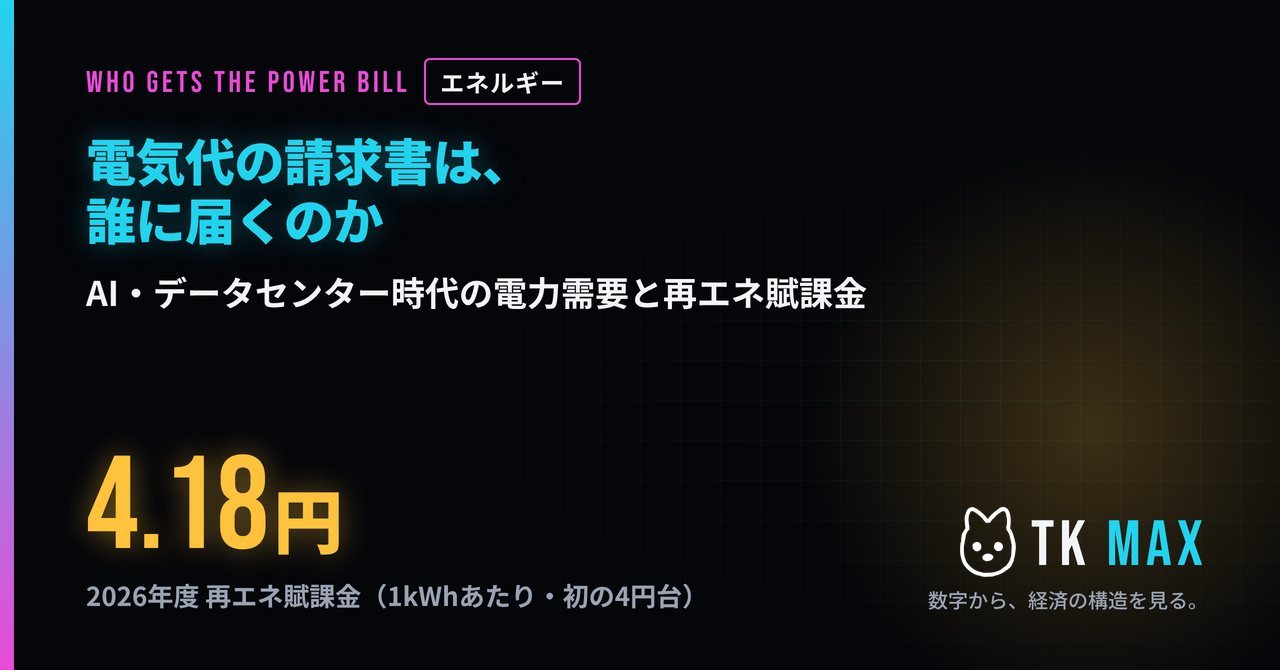
| 再エネ賦課金の転嫁構造 | 2026年度は4.18円/kWh(標準家庭で年間約2万円)。使用量に比例してすべての需要家が負担 | 再エネ拡大の恩恵と負担は概ね比例するという想定 | データセンターなど大口需要家の急増分も、家庭を含む全需要家に広く薄く転嫁される |
| AI企業側の電力調達行動 | 大手クラウド事業者は非化石証書の購入や専用電源契約でRE100目標を達成する動きが中心 | 電力を大量消費する事業者は相応のインフラコストも負担するという想定 | 供給責任(系統安定化コスト)と環境価値(証書調達)が分離し、前者のコストは一般需要家に残りやすい |
| EV充電の家庭負担 | EV所有者の約86%が自宅で充電。電気代が1.2〜1.3倍に増えたと感じるユーザーは約6割 | EV普及は家計のガソリン代削減に直結するという想定 | 電気代自体の上昇(賦課金・卸電力価格)が、EVの経済メリットを部分的に相殺しうる |
| Indicator | Current state | Traditional assumption | Implication |
|---|---|---|---|
| National electricity demand trend | OCCTO projects +5.3% for FY2035 vs. FY2025 (published Jan 2026) | Conventional wisdom: demand keeps falling as population declines | A 20+ year declining trend may be at an inflection point |
| Data-center location skew | Regions building next-gen chip plants (e.g. Rapidus in Hokkaido) show sharply outsized demand growth | Assumption that demand grows roughly evenly nationwide | Grid-reinforcement costs concentrate regionally, raising questions about how those costs get allocated |
| How the renewable surcharge is passed through | FY2026 rate is ¥4.18/kWh (~¥20,000/year for a standard household). Every user pays in proportion to usage | Assumption that renewable-expansion benefits and costs track roughly together | Surging demand from large users like data centers still gets spread thinly across every user, households included |
| How AI firms actually procure power | Major cloud operators mostly meet RE100 targets via non-fossil certificates or dedicated power contracts | Assumption that heavy power users also shoulder a proportional share of grid infrastructure cost | Supply responsibility (grid-stabilization cost) and environmental value (certificates) get decoupled — the former tends to stay with ordinary ratepayers |
| EV charging's household burden | ~86% of EV owners charge at home; ~60% say their electricity bill rose 1.2–1.3x | Assumption that EV adoption directly cuts household fuel (gasoline) spending | Rising electricity costs themselves (surcharges, wholesale power prices) can partly offset EVs' economic advantage |
⚠️ AIの「物理的な壁」とも地続きの構造
本サイトの別ダッシュボードでは、AI投資そのものが電力・半導体という物理制約にどこまで直面するかを扱っています。今回のテーマはその一歩先――物理制約を乗り越えるための投資(系統増強・再エネ導入)自体のコストが、最終的に誰の電気料金へ計上されるのかという「請求書の宛先」の問題です。AIが生み出す需要と、それを支える一般家庭の負担は、同じ系統の中で表裏一体の関係にあります。
A sibling dashboard on this site examines how far AI investment itself runs into physical constraints — power and semiconductors. This dashboard picks up one step further down that chain: the cost of the investment needed to work around those constraints (grid reinforcement, renewable build-out) still has to be billed to someone. The demand AI creates and the burden ordinary households carry are two sides of the same grid.
数値の出典・詳細はタブ「04 データ・出典」を参照してください。
年表:2012年から未来へ
再エネ賦課金の物語は2012年のFIT(固定価格買取制度)開始から始まります。そこに2024年以降の生成AIブームが重なり、電力需要の主役が「減り続ける家庭」から「急増するデータセンター・半導体工場」へと移り変わりつつあります。年表の後半(2028年以降)は確定した未来ではなく、現時点の推計・シナリオです。
電力コスト負担・逼迫シミュレーター
2つのスライダーを動かして、「再エネ賦課金の水準」と「データセンター・半導体工場の最大需要電力の増加ペース」が同時に進んだとき、家庭の負担と系統の逼迫がどこまで高まるかを確かめてください。
📐 計算式を見る(透明性のため公開)
この式は2つの入力(賦課金単価・需要倍率)だけから機械的に算出される簡易モデルです。実際の電気料金・系統運用はもっと多くの変数(燃料費調整額、容量市場の落札結果、地域ごとの系統増強計画など)に左右されます。投資助言・政策提言を目的としたものではありません。
Data & Sources
本ダッシュボードで使用した主要な一次情報・報道です。すべて公開情報に基づいています。数値は取得時点(2026年9月)のものであり、今後の改定・修正の可能性があります。
本タブは随時更新するログです。一次情報の更新・リンク切れなどが判明した場合は反映していきます。
背景:なぜ「電気代の請求書」は家庭に集中するのか
再エネ賦課金や系統増強費用は、日本の電気料金制度上、使用量(kWh)に比例してすべての需要家に配分されます。これは制度としては公平に見えますが、需要が急拡大している主体(データセンター・半導体工場)と、その費用を実際に負担する主体(家庭を含む全需要家)が一致しない、という構造上のねじれを生みます。
大手クラウド事業者の多くは、自社のRE100目標を「非化石証書の購入」や「専用の再エネ電源契約(コーポレートPPA)」で達成しようとします。これは需要家自身にとって合理的な選択ですが、系統全体の安定運用に必要な増強投資(送配電網・調整力・予備電源)のコストとは別会計です。つまり、AIが生み出す新たな需要の「環境価値」は特定の大口需要家が調達できても、その需要を支える「物理インフラのコスト」は系統利用者全体で広く負担する、という分離が起きやすい構造になっています。
Under Japan's electricity tariff system, both the renewable surcharge and grid-reinforcement costs are allocated to every user in proportion to their usage (kWh). On paper this looks equitable, but it creates a structural mismatch: the parties driving the surge in demand (data centers, chip plants) are not the same parties who ultimately foot the bill (every user, households included).
Many large cloud operators meet their own RE100 targets by purchasing non-fossil certificates or signing dedicated renewable power contracts (corporate PPAs) — a rational choice for that individual buyer. But that is accounted for separately from the reinforcement investment (transmission/distribution, balancing capacity, reserve power) the whole grid needs to stay stable. In effect, the "environmental value" of the new demand AI creates can be captured by a specific large buyer, while the "physical infrastructure cost" that demand requires tends to be spread across every grid user.
🔄 もう一つの見方:データセンター投資は地域経済・系統強靭化にもプラスに働きうる
一方で、データセンターや半導体工場の立地は、地域の雇用創出や固定資産税収の増加、送配電インフラそのものの前倒し投資による長期的な系統強靭化につながるという見方もあります。北海道のように人口減少に直面する地域にとって、需要創出そのものが経済的なプラス材料になりうる側面も無視できません。費用の帰着先だけでなく、便益の帰着先も合わせて見る必要があります。
On the other hand, data-center and chip-plant siting can also bring local job creation, higher fixed-asset tax revenue, and grid reinforcement that gets pulled forward — strengthening the grid's long-term resilience. For a region like Hokkaido facing population decline, the demand itself can be a genuine economic upside. Costs and benefits both need to be traced back to where they actually land, not just costs alone.
📚 歴史から見ると:インフラ投資の受益と負担が一致しなかった先例
特定の産業・地域の急成長を支えるために社会インフラ全体で費用を分担する、という構造は今回が初めてではありません。高度経済成長期の電源開発や、近年の再エネ導入拡大そのものも、恩恵と負担の帰着先が完全には一致しない中で進められてきました。今回のAI・データセンター需要は、その延長線上にある新しい局面と位置付けられます。
Spreading the cost of infrastructure across society to support the rapid growth of a specific industry or region is not a new structure. Power-source development during Japan's high-growth era, and the renewable build-out itself in recent years, both proceeded without benefits and costs landing on exactly the same parties. The current AI/data-center demand surge can be seen as a new phase of that same long-running pattern.
⚠️ 関連ダッシュボード:AIの物理制約と需要蒸発
AI投資そのものが電力・半導体という物理的な壁にどこまで直面するのかは、本サイトの ai_market_risk_hub.html で扱っています。また、AI・自動化と少子高齢化が同時に需要そのものを縮小させていく構造は ai_demand_evaporation_simulator.html で検証しています。本ダッシュボードのテーマ(電力コストの帰着先)は、その両方と地続きの論点です。
How far AI investment itself runs into the physical wall of power and semiconductor constraints is covered in this site's ai_market_risk_hub.html. And the structure by which AI/automation and a falling birthrate can shrink demand itself at the same time is examined in ai_demand_evaporation_simulator.html. This dashboard's theme — where electricity cost actually lands — connects directly to both.