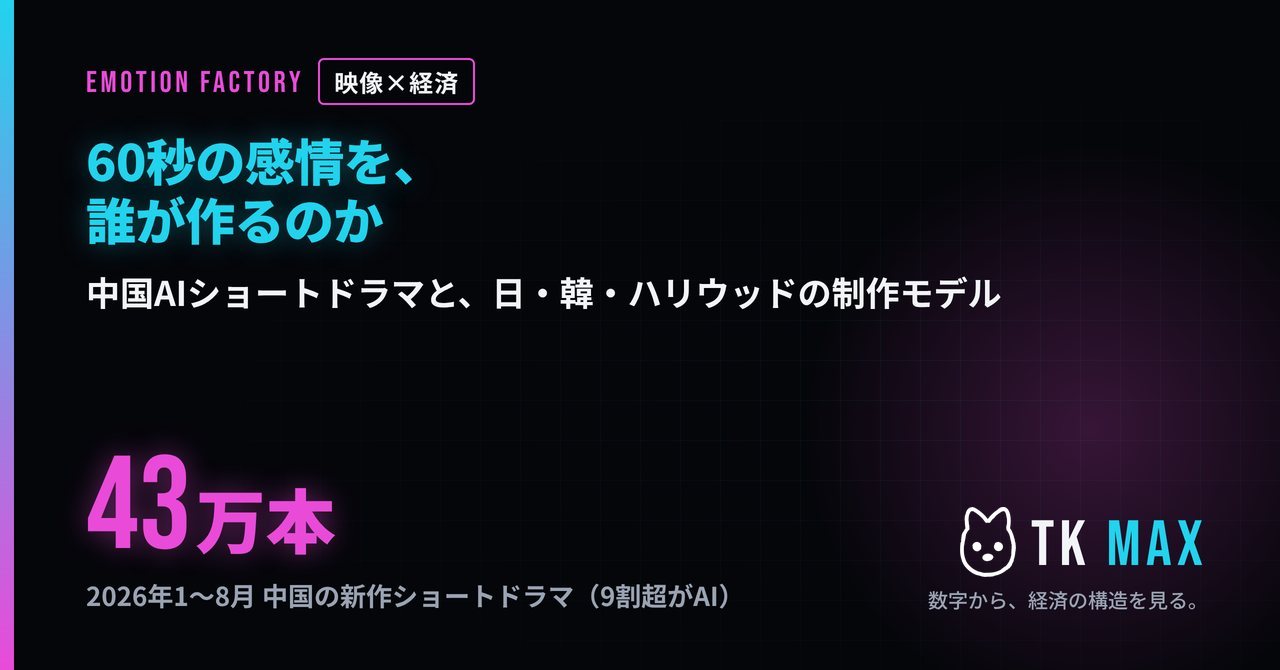
60秒の感情を、誰が作るのかWho Makes the 60 Seconds of Emotion?―― 中国AIショートドラマと、日・韓・ハリウッドの制作モデル比較— China's AI short dramas vs. the production models of Japan, Korea and Hollywood
✨ 公開データをもとに、独立した立場で分析しています。✨ Independent analysis built on public data.☕ 応援するSupport
About 60 seconds per episode. Hook in the first 3 seconds, leave a rush of payback. China's vertical short dramas are a genre their own makers call "emotional products." In 2026 the makers switched from humans to AI almost overnight: 430,000 new titles in January–August, over 90% made with AI. Yet most of the big hits are still live action. This page lays out how China, Korea, Japan and Hollywood each try to win, and what happens to the "places where people learn the craft" as AI takes them over.
💡 なぜ作ったか:中国でAIを使った縦型ショートドラマが急増しているという報道がきっかけです。日本のテレビドラマ、韓国ドラマ、ハリウッドの作り方と比べると何が違うのか、Netflixの動きも含めて整理するために作りました。💡 Why this dashboard: It began with reports of AI-made vertical short dramas surging in China. This sorts out how that model differs from Japanese TV dramas, Korean dramas and Hollywood, including what Netflix is doing.
43万本430K
2026年1〜8月の中国の新作ショートドラマ(2025年通年の13倍、9割超がAI)New Chinese short dramas, Jan–Aug 2026 (13× all of 2025; 90%+ AI)
約1/14〜1/20≈1/14–1/20
AI化による1作品の制作費(約1,400万円→70万〜100万円)Cost per title after switching to AI (≈¥14M → ¥0.7–1M)
7 対 167 vs 16
抖音で10億回以上伸びた作品数:AI対実写(2026年上半期)Titles with 1B+ views on Douyin: AI vs live action (H1 2026)
約6倍≈6×
韓国ドラマ1話の制作費(約10年で5億→約30億ウォン)Korean drama cost per episode (≈₩0.5B → ≈₩3B in ~10 years)
約50%≈50%
Netflix会員のうち、アニメを見ている人の割合Share of Netflix members who watch anime
👀 まず、ここだけは見てほしい ―― 3つのポイント👀 If you see nothing else — 3 key points
細かい話は後回しでOK。押すとそのタブへ移動します。Details can wait. Tap to jump to that tab.
📄=当局・企業の公表、または報道で確認された数字。📊=公表値に仮定を置いて計算した目安(前提はその場で明記)。💬=業界内でも見方が分かれる論点。📄 = figures published by authorities/companies or confirmed in reporting. 📊 = rough estimates built from published figures plus stated assumptions. 💬 = points on which the industry itself disagrees.
OVERVIEW春節の1週間で、業界が入れ替わったAn industry swapped over in one holiday week
In February 2026, just before Lunar New Year, the video-generation AI "Seedance 2.0" was released. The CEO of a Shanghai production company recalls: "Two days before the holiday we were still wrapping live-action shoots; on the first day back, we had moved to AI production." The generative AI DeepSeek writes the script, AI plans the shots, and AI even gives camera direction such as "as if shot handheld." The office has no cameras or lights; a handful of people in their 20s and 30s with no live-action experience work at computers.
📄① 量の爆発① Volume explosion
新作は8か月で43万本。2025年の年間本数の13倍で、9割超がAI作品です。430,000 new titles in eight months: 13× the 2025 annual total, over 90% AI.
📄② コストの崩壊② Cost collapse
実写で約1,400万円だった1作品が、AIなら70万〜100万円。70〜80人いたスタッフは数人になりました。A title that cost ≈¥14M in live action now costs ¥0.7–1M with AI. A crew of 70–80 shrank to a few people.
📄③ それでもヒットは実写③ Hits are still live action
10億回以上再生された作品は、実写16に対してAIは7。数では圧倒しても、心をつかむ力ではまだ追いついていません。Among titles with 1B+ views, live action has 16 vs AI's 7. AI wins on count, not yet on pull.
このページの見取り図How this page is laid out
作る側Makers
中国はAIで量、韓国は高予算の実写、日本はアニメ、ハリウッドは大作China: AI volume; Korea: big-budget live action; Japan: anime; Hollywood: tentpoles
→
届ける側Distributors
Netflixは「視聴時間」から「収益」へ。YouTubeは無料・広告なしの受け皿にNetflix shifts from "hours" to "revenue"; YouTube becomes the free / ad-free catch basin
→
見る側Viewers
時間がない。CMは嫌。見たい作品の時だけ契約するNo time, no patience for ads, subscribe only for the one show they want
💬このページの問いThe question this page asks
AIが置き換えているのは、主に作品の「中位以下」の部分だと制作現場は見ています。しかし、俳優やスタッフが経験を積んできたのも、まさにその中位以下の現場でした。量の時代に、次のトップ層はどこで育つのか。中国で起きている変化は、日本にも重なる問いです。Producers say AI is mainly replacing the "middle and lower" tiers of work. But that middle-and-lower tier is exactly where actors and crews have built their experience. In an age of volume, where will the next top tier be trained? What is happening in China poses the same question to Japan.
CHINAAIショートドラマの爆発と、その限界The AI short-drama explosion, and its limits
📄The China Netcasting Services Association's white paper (Nov 2024) projected the 2024 micro-drama market at ¥50.44 billion yuan (≈¥1.16 trillion yen), up 34.9%, overtaking the year's film box office for the first time. Viewers numbered 576 million as of June 2024, 52.4% of internet users.
ショートドラマ市場と映画興行収入(2024年、億元)Short-drama market vs. film box office (2024, ¥100M yuan)
ショートドラマ市場(見込み)Short-drama market (projected)504.4
映画興行収入(白書時点の見込み)Film box office (projection at the time)470
出典:中国網絡視聴協会『中国微短劇行業発展白皮書(2024)』(第一財経の報道)。1元=約23円で換算。Source: CNSA 2024 white paper (via Yicai). Converted at ≈¥23 per yuan.
2026年に何が起きたかWhat happened in 2026
2023
上海の制作会社が、映画から実写ショートドラマへ舵を切る。ショートドラマ市場が急拡大。A Shanghai producer pivots from film to live-action short dramas as the market booms.
2026年2月FEB 2026
春節前に動画生成AI「Seedance2.0」が公開。休暇を挟んだ7〜8日間で業界が一変したと語られる。"Seedance 2.0" is released before Lunar New Year; insiders say the industry changed within the 7–8 day holiday.
2026年4月APR 2026
中国当局が、AIドラマの公開前の届け出を義務化。上記の制作会社も制作部門の一部をAIに転換。Authorities require pre-release filing for AI dramas. The same producer moves part of its production to AI.
2026年1〜8月JAN–AUG 2026
新作43万本。2025年通年の13倍、9割超がAI。430,000 new titles: 13× 2025's annual total, 90%+ AI.
2026年9月SEP 2026
AI生成作品の表示義務などを定めた新しい管理規則を施行。重要な工程と完成品は人間が審査すること、AIによる悪質な改変の禁止も強調。New rules take effect requiring AI-generated labels, human review of key steps and finished work, and banning malicious AI alterations.
量とヒットは別物Volume and hits are different things
7
AI作品AI titles
VS
16
実写作品Live-action titles
抖音(中国版TikTok)で再生回数が10億回以上伸びた作品数(調査会社DataEye、2026年上半期)。Titles that gained 1B+ views on Douyin (Chinese TikTok), per DataEye, H1 2026.
💬制作現場の見立てHow producers read it
上海の制作会社CEOは、AIが置き換えるのは実写作品の「中位以下」で、トップ層には代わりのきかない魅力があると見ています。今後は実写・AI・両者を組み合わせた作品が共存するという見方です。ただし同じCEOは、AIドラマの収益は以前より下がり、撤退する人も増えているとも話しています。誰でも作れるようになった結果、1本あたりの稼ぎが薄まっているということです。The Shanghai CEO believes AI replaces the "middle and lower" tier of live action, while the top tier has an appeal AI can't substitute. He expects live action, AI and hybrids to coexist. But he also says AI-drama earnings have fallen and more people are quitting: when anyone can make one, each title earns less.
FOUR WAYS TO WIN中国・韓国・日本・ハリウッド、それぞれの勝ち筋China, Korea, Japan and Hollywood each play a different game
作り方Model
1話・1作の制作費Cost per episode / title
世界での強みGlobal strength
AIの影響AI impact
中国ショートChina shorts
縦型60秒×数十話。数人+AIで大量生産Vertical 60s × dozens of eps; a few people + AI, mass-produced
AI:70万〜100万円/作 実写:約1,400万円/作 📄AI: ¥0.7–1M per title Live: ≈¥14M per title 📄
数と速さ。吹き替えで海外にも流通Count and speed; dubbed for overseas
すでに新作の9割超Already 90%+ of new titles
韓国ドラマKorean drama
高予算の実写シリーズ。世界配信前提Big-budget live-action series made for global streaming
約30億ウォン(約3.2億円)/話(約10年前の約6倍)📄≈₩3B (≈¥320M) per episode, ≈6× a decade ago 📄
実写のヒットを安定して量産Reliably produces live-action global hits
高騰した制作費を下げる手段として期待Seen as a way to rein in soaring costs
日本ドラマJapanese drama
民放の連続ドラマ。国内視聴が中心Broadcast serials, mostly for domestic viewers
約3,000万円/話(目安)📊≈¥30M per episode (rough guide) 📊
実写の世界ヒットは少ないFew global live-action hits
予算削減の圧力が先に来るBudget-cut pressure arrives first
日本アニメJapanese anime
原作IP×スタジオ。海外配信と劇場Source IP × studios; global streaming and cinema
数千万円規模/話(業界推計)📊Tens of millions of yen per episode (industry estimate) 📊
Netflix会員の約半数が視聴。劇場版は海外興収70%超の例もWatched by ≈half of Netflix members; some films earn 70%+ abroad
作画工程の効率化と、権利・品質の議論が並走Efficiency gains alongside rights and quality debates
ハリウッドHollywood
大作映画と配信シリーズ。組合が強いTentpole films and streaming series; strong unions
大作で2億ドル(約300億円)級/作 📊Tentpoles ≈$200M (≈¥30B) per film 📊
世界興行と知名度Global box office and brand reach
2023年のストライキでAIの使い方を契約で縛った2023 strikes wrote AI limits into contracts
1分あたりの制作費の目安(対数目盛)Rough production cost per minute (log scale)
中国AIショートChina AI short約1万円≈¥10K
中国実写ショートChina live-action short約14万円≈¥140K
日本の連続ドラマJapanese TV drama約65万円≈¥650K
韓国の大型ドラマKorean big-budget drama約500万円≈¥5M
ハリウッド大作Hollywood tentpole約2.3億円≈¥230M
📊試算の前提:中国ショート1作品=総尺約100分(1〜2分×60〜80話)、日本ドラマ1話=本編約46分、韓国ドラマ1話=約65分、ハリウッド大作=2億ドル・130分・1ドル150円。作品ごとの差が大きく、桁の違いを見るための目安です。Assumptions: a Chinese short ≈100 min total (1–2 min × 60–80 eps); Japanese episode ≈46 min; Korean episode ≈65 min; Hollywood tentpole = $200M, 130 min, ¥150/$. Titles vary widely — this is only for comparing orders of magnitude.
数字で見る、それぞれの事情Each market's situation in numbers
📄韓国:成功が招いた制作費の高騰Korea: success drove costs up
韓国ドラマ1話(約1時間)の制作費は、約10年前の5億ウォン(約5,400万円)から約30億ウォンへ膨らみました。Netflixの参入で主演俳優の出演料が上がり、業界全体の相場を押し上げたとされます。Netflixは2023年に、4年間で25億ドルを韓国コンテンツに投資すると発表しました。一方で同社の韓国担当は2025年、年100〜150本あった時期から制作が落ち込んだことを認め、「コスト管理の規律」を課題に挙げています。A Korean episode (~1 hour) went from ≈₩0.5B (≈¥54M) a decade ago to ≈₩3B. Netflix's entry pushed up lead-actor fees and the whole market's rates. In 2023 Netflix announced $2.5B in Korean content over four years. In 2025 its Korea content head acknowledged output had dipped from a peak of 100–150 series a year and called for "discipline in managing costs."
📄日本:世界で稼ぐのはアニメJapan: anime earns abroad
2026年上半期、Netflixでの日本作品の視聴時間は61億時間を超え、非英語圏で2位でした。ただしその大半はアニメです。実写で比べると、韓国の「復讐の授業」が4,800万時間なのに対し、日本の「地獄に堕ちるわよ」は1,000万時間、「九条の大罪」は900万時間でした。日本政府は2033年にコンテンツ輸出20兆円を目標にしています。In H1 2026, Japanese titles on Netflix topped 6.1B viewing hours, second among non-English markets — mostly anime. In live action, Korea's "Revenge Class" logged 48M hours vs Japan's "Jigoku ni Ochiru wa yo" at 10M and "Kujo no Taizai" at 9M. Japan's government targets ¥20 trillion in content exports by 2033.
THE BATTLE FOR TIME配信各社と、視聴者の時間の奪い合いStreamers and the fight for viewers' hours
Netflixは「視聴時間」から「収益」へNetflix: from "hours watched" to "revenue"
📄Total Netflix viewing in H1 2026 hit a record 97 billion hours, over a third of it non-English. Still, Netflix signaled a shift "from viewing hours to revenue and operating profit" and announced its twice-yearly viewing report will become annual from 2027. Its stock fell 7–9% on earnings and more than 20% year-to-date.
Netflixの実写作品:韓国と日本(2026年上半期の視聴時間、万時間)Netflix live action: Korea vs Japan (H1 2026 viewing hours, 10K h)
復讐の授業(韓国)Revenge Class (Korea)4,800
地獄に堕ちるわよ(日本)Jigoku ni Ochiru wa yo (Japan)1,000
九条の大罪(日本)Kujo no Taizai (Japan)900
出典:Netflix「What We Watched」2026年上半期(DEINKOのnote記事による整理)。Source: Netflix "What We Watched" H1 2026 (as summarized by DEINKO on note).
📄アニメはNetflixの成長の柱Anime is a growth pillar for Netflix
Netflixのアジア担当幹部は2025年、会員の約50%がアニメを見ており、これは約1億5,000万世帯、控えめに見ても3億人以上にあたると説明しました。アニメの視聴時間は過去5年で3倍です。同社は2025年、米国の「Anime Expo」に初めてブースを出しています。同じ幹部が韓国コンテンツも統括しているため、「韓国を減らしてアニメへ」というより、韓国の実写とは別の柱としてアニメを伸ばしている、と読むのが自然です。In 2025 Netflix's Asia content executive said about 50% of members watch anime — ≈150 million households, conservatively 300M+ people — and anime viewing has tripled in five years. Netflix exhibited at Anime Expo in the US for the first time in 2025. The same executive oversees Korean content, so it reads less like "cut Korea for anime" and more like building anime as a second pillar alongside Korean live action.
📄日本の有料放送も同じ流れJapan's pay TV shows the same trend
WOWOWは加入件数の月次公表をやめて四半期決算に集約し、スカパーは加入の純減が続いています。「何人が見ているか」を毎月見せること自体が、各社にとって重荷になっています。WOWOW stopped publishing monthly subscriber counts, folding them into quarterly results, and SKY PerfecTV! continues to lose net subscribers. Showing "how many are watching" every month has itself become a burden.
中国の60秒は、日本では「1時間半のまとめ」になるChina's 60 seconds become a 90-minute compilation in Japan
中国で制作Made in China
縦型・1話約60秒・数十話Vertical, ≈60s per ep, dozens of eps
→
吹き替え・再編集Dubbed & re-cut
日本語吹き替えで、1〜2時間の長尺にまとめるJapanese dub, stitched into 1–2 hour videos
→
YouTubeで視聴Watched on YouTube
数万〜十数万回再生のまとめ動画が大量に並ぶCountless compilations with tens of thousands to 100K+ views
📄Industry insiders estimate Japan's short-drama market at ≈¥13 billion in 2024, versus ≈¥1 trillion for Chinese companies' overseas short dramas. Japanese apps (BUMP, FANY :D and others) keep launching, but dubbed YouTube compilations have spread faster as the entry point.
💬よくある視聴パターン:「時間がない・CMは嫌・必要な時だけ契約」A common viewing pattern: "no time, no ads, subscribe only when needed"
NetflixやAmazonプライムは、CMの煩わしさと「見る時間がない」ことから解約Cancels Netflix and Amazon Prime — the ads are annoying and there's no time to watch
どうしても見たい新作(例:アニメ映画の配信開始)の時だけ数日契約して、すぐ解約するSubscribes for a few days only when a must-see title drops (e.g., an anime film), then cancels
生成AIを使う時間が増えた分、長編ドラマを見る時間が削られているMore time spent using generative AI means less time for long-form drama
配信各社にとって最も厄介なのが、この「必要な時だけ契約する」行動です。Netflixが視聴時間より収益を重視し始めた背景には、時間の奪い合いで動画以外(SNS、ゲーム、AI)とも競うようになった現実があります。For streamers, this "subscribe only when needed" behavior is the hardest to deal with. Netflix's shift from hours to revenue reflects a reality in which it now competes for time with things other than video — social media, games, and AI.
CREWS & TALENT消えていく撮影現場と、人が育つ場所Vanishing sets, and where people learn the craft
中国:「中国のハリウッド」横店の空洞化China: Hengdian, "China's Hollywood," empties out
📄Hengdian in Zhejiang is said to host ≈90% of China's period short-drama shoots. Short-drama crews received there in January–May 2026 fell by at least half year on year. A reporter visiting its four main bases in early September found just one shoot under way.
ある監督の鄭州での仕事(昨年から)One director's work in Zhengzhou (since last year)−60%
俳優の日当の例(1万元→1,000〜2,000元)Actor day rate example (¥10K → ¥1–2K yuan)−80〜90%
出典:FNNプライムオンライン(2026年10月12日)。日当200元で1日20時間撮影するチームも多いという証言もある。Source: FNN Prime Online (Oct 12, 2026). Testimony also describes many crews offering ¥200 yuan a day for ~20-hour shoots.
Live-action sets were never easy. Shooting a period piece could mean 2–4 hours of sleep a night for 6–7 days; the industry called them "life-shortening short dramas." AI has genuinely reduced long shoots and stunt risk, which makes safety management easier for owners.
ハリウッド:AIをめぐる最初の大きな労使交渉Hollywood: the first big labor fight over AI
📄2023年のダブルストライキThe 2023 double strike
脚本家組合(WGA)は148日、俳優組合(SAG-AFTRA)は118日のストライキを行いました。結果として、AIを「脚本家」として扱わないこと、俳優のデジタル複製には本人の同意と報酬が必要なことが契約に入りました。AIの使い方を労使で先にルール化した、最初の大きな例です。The Writers Guild (WGA) struck for 148 days and the actors' union SAG-AFTRA for 118. Contracts now say AI can't be credited as a writer and that digital replicas of actors require consent and pay — the first major case of labor and management setting AI rules in advance.
📄それでも仕事は戻らないYet the work hasn't come back
米労働統計局のデータでは、ロサンゼルス郡の映画関連の雇用は2022年末の約14.2万人から2024年末の約10万人へ、2年で約4.2万人減りました。テレビの年間撮影日数は2021年の18,560日から2024年の7,716日へ58.4%減少(FilmLA)。AIだけでなく、配信バブルの終わりと撮影の州外・国外流出が重なっています。BLS data show LA County motion-picture employment fell from ≈142,000 (end-2022) to ≈100,000 (end-2024), ≈42,000 jobs in two years. TV shoot days dropped 58.4%, from 18,560 in 2021 to 7,716 in 2024 (FilmLA). AI is one factor alongside the end of the streaming boom and production fleeing the state and country.
「中位層」が消えると何が起きるかWhat happens when the "middle tier" disappears
TOP
トップ層:AIでは代えにくい作品・俳優・監督Top tier: works, actors, directors AI can't easily replace
ヒットを取る層。ここは当面残る。ただし、毎年引退する人の穴を下から埋める必要があるWhere hits come from. Safe for now — but every year's retirements must be refilled from below
MID
中堅:経験を積んだスタッフ・脇役Mid tier: experienced crew and supporting actors
トップ層の予備軍。下積みの現場から上がってくるThe bench for the top tier, promoted up from the training ground
LOW
下積み:「中位以下」と評価される作品の現場Training ground: sets for works rated "middle or below"
AIが真っ先に置き換えている層。作品の評価は低くても、ここで得る経験が次の仕事につながってきたThe tier AI is replacing first. The works may rate low, but the experience gained here has been the path to the next job
💬記事を書いた報道カメラマンの問いThe question posed by the reporting cameraman
最初から名作を撮ったり、名演技ができたりする人は少ない。作品として「中位以下」と評価されても、そこで得る経験が次の仕事につながる。そうした現場が減れば、将来の実写を担う俳優やスタッフも少なくなるのではないか ―― FNN上海支局のカメラマンは、そう問いかけています。Few people shoot a masterpiece or give a great performance from the start. Even work rated "middle or below" gives experience that leads to the next job. If such sets shrink, won't there be fewer actors and crew to carry live action in the future? — so asks FNN's Shanghai bureau cameraman.
SIMULATOR下積みの現場が消えると、トップ層はどうなるかIf the training ground disappears, what happens to the top tier?
Set how much of the "middle and lower" tier AI replaces, and how much of that is kept as "sets that train people." The chart shows how live-action sets and the future top-tier talent pool change (both indexed to today = 100).
Replacement in year t: e = rate × min(1, t/3). Live-action sets M = 100 × (1 − e × (1 − training share)). Top tier T(t) = T(t−1) × 0.94 + M × 0.06 (retirements and promotions balance at today's level). Volume multiple = 100 ÷ (100 × (1 − e) + e × 100/14). All figures are assumptions to show the mechanism — not real headcounts or forecasts.
※教育・研究目的の簡易モデルです。特定の企業・業界の将来を予測するものではありません。*A simplified model for education and research. It does not forecast any company's or industry's future.
BOTH SIDES & SOURCESAIは才能を育てるのか、奪うのかDoes AI grow talent or take it away?
💬AIは入口を広げる、という見方View: AI widens the entrance
撮影経験がなくても、自分の感覚を頼りに映像を作れるようになった。上海の制作会社では、実写の経験がない20〜30代が「自分が違和感なく見られるものなら、一般の視聴者も同じように見られる」と判断して作っています。カメラ・照明・数十人の予算がなくても物語を形にできることは、新しい才能の入口になりえます。危険なスタントや睡眠2〜4時間の撮影が減ることも、働く人にとっては前進です。People with no shooting experience can now make video by trusting their own eye. In Shanghai, 20- and 30-somethings with no live-action background judge their work by "if I can watch it without discomfort, so can ordinary viewers." Being able to realize a story without cameras, lights and dozens of crew can be a new door for talent. Fewer dangerous stunts and 2-hour-sleep shoots is also progress for workers.
💬AIは育つ場を消す、という見方View: AI erases the place to grow
実写の現場には、作品を作る以外に「人を育てる」役割がありました。中位以下の現場が消えれば、俳優・カメラマン・照明・音声が経験を積む場所も消えます。AIで大量に作れても、ヒットはまだ実写が取っている。そのトップ層を将来担う人材の供給源を、いま削っているのではないか。さらに、誰でも作れるようになったことで1本あたりの収益は下がり、AI制作からも撤退する人が増えています。Live-action sets had a role beyond making shows: training people. If middle-and-lower sets vanish, so do the places where actors, camera, lighting and sound crews gain experience. AI can mass-produce, but hits still come from live action — are we cutting off the supply of people who will become that top tier? And with anyone able to make content, earnings per title are falling and people are leaving AI production too.
📊TK MAXとしての整理TK MAX's summary
数字が示しているのは「量はAI、ヒットは実写」という分業です。どちらが勝つかではなく、AIで浮いたお金と時間を「人を育てる現場」にどれだけ戻せるかが、10年後の実写の厚みを左右します。日本はアニメという別の強みを持つ一方、実写ドラマは国内中心で予算削減の圧力を受けやすく、中国と同じ空洞化が静かに進む可能性があります。The numbers point to a division of labor: AI for volume, live action for hits. The question is not which wins, but how much of the money and time AI saves is put back into sets that train people — that decides how deep live action will be in ten years. Japan has a separate strength in anime, but its live-action drama is domestic and budget-squeezed, so the same hollowing-out seen in China could advance quietly there too.
出典Sources
FNNプライムオンライン「中国の新作ショートドラマの9割超がAI作品に 変わりゆく『作る仕事』と『得られる経験』」(2026年10月12日、ライブドアニュース掲載)FNN Prime Online: "Over 90% of China's new short dramas are AI-made" (Oct 12, 2026, via Livedoor News)news.livedoor.com
第一財経「中国微短劇行業発展白皮書(2024)」の報道(2024年11月6日)Yicai: report on CNSA's 2024 micro-drama white paper (Nov 6, 2024)yicai.com
DEINKO「日本作品61億時間でも実写は韓国に完敗。Netflix開示縮小の真意」(note、2026年7月19日)DEINKO: "6.1B hours for Japan, but live action loses to Korea" (note, Jul 19, 2026)note.com
日経エンタテインメント!「Netflixアジア統括が語る『日本アニメの重要性』と『アニメ戦略』」(2025年8月22日)Nikkei Entertainment: Netflix Asia executive on anime's importance and strategy (Aug 22, 2025)xtrend.nikkei.com
北海道新聞「<まちかど>ソウル 韓国ドラマ、AIが救う?」(2026年3月3日)Hokkaido Shimbun: "Seoul — can AI save Korean drama?" (Mar 3, 2026)hokkaido-np.co.jp
Screen Global Production — Netflix's Don Kang on Korean production slowdown (Jun 25, 2025) screenglobalproduction.com
Deccan Herald — Netflix to invest $2.5bn in South Korean content deccanherald.com
文春オンライン(2025年9月8日)日本のドラマ制作費・韓国俳優のギャラに関する記述Bunshun Online (Sep 8, 2025) on Japanese drama budgets and Korean actor feesbunshun.jp
リアルサウンド「ショートドラマ市場が急速に拡大中」(2025年7月)Real Sound: "The short-drama market is expanding fast" (Jul 2025)realsound.jp
No Film School — "Hollywood Is Dying — 42,000 Jobs Gone in Just 2 Years" (BLS / FilmLA data) nofilmschool.com
データは2026年10月13日時点の公開情報に基づきます。中国のショートドラマの本数・比率は中国当局の発表を報道経由で引用したものです。制作費の比較は作品ごとの差が大きく、桁の違いを見るための目安です。Data reflect public information as of October 13, 2026. Chinese title counts and shares are official figures as cited in reporting. Cost comparisons vary widely by title and are only for comparing orders of magnitude.
*This page is an educational and research analysis based on public materials and reporting. It does not rate or condemn any company, work or country. Figures are as of each source's publication; currency conversions and estimates include assumptions.